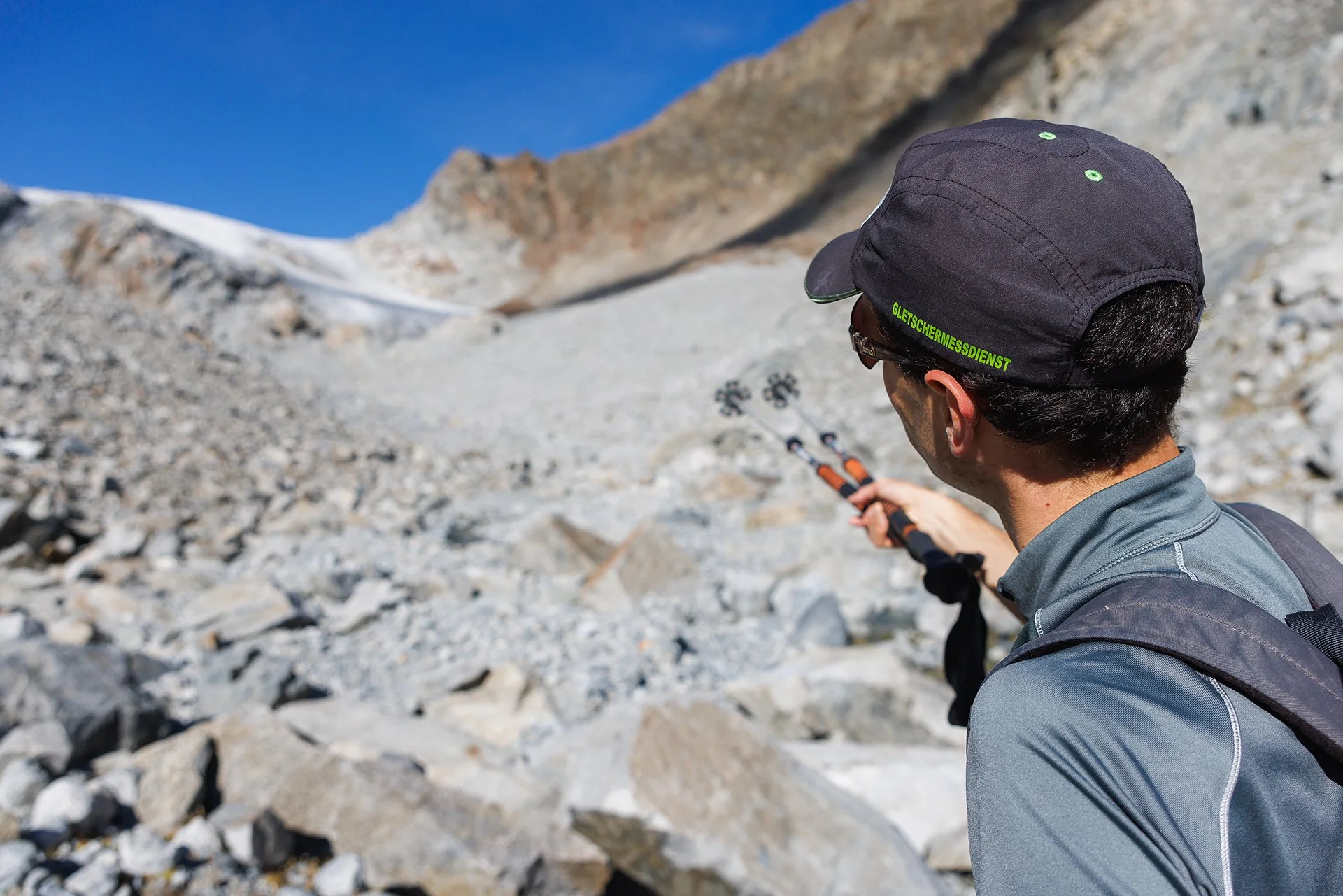
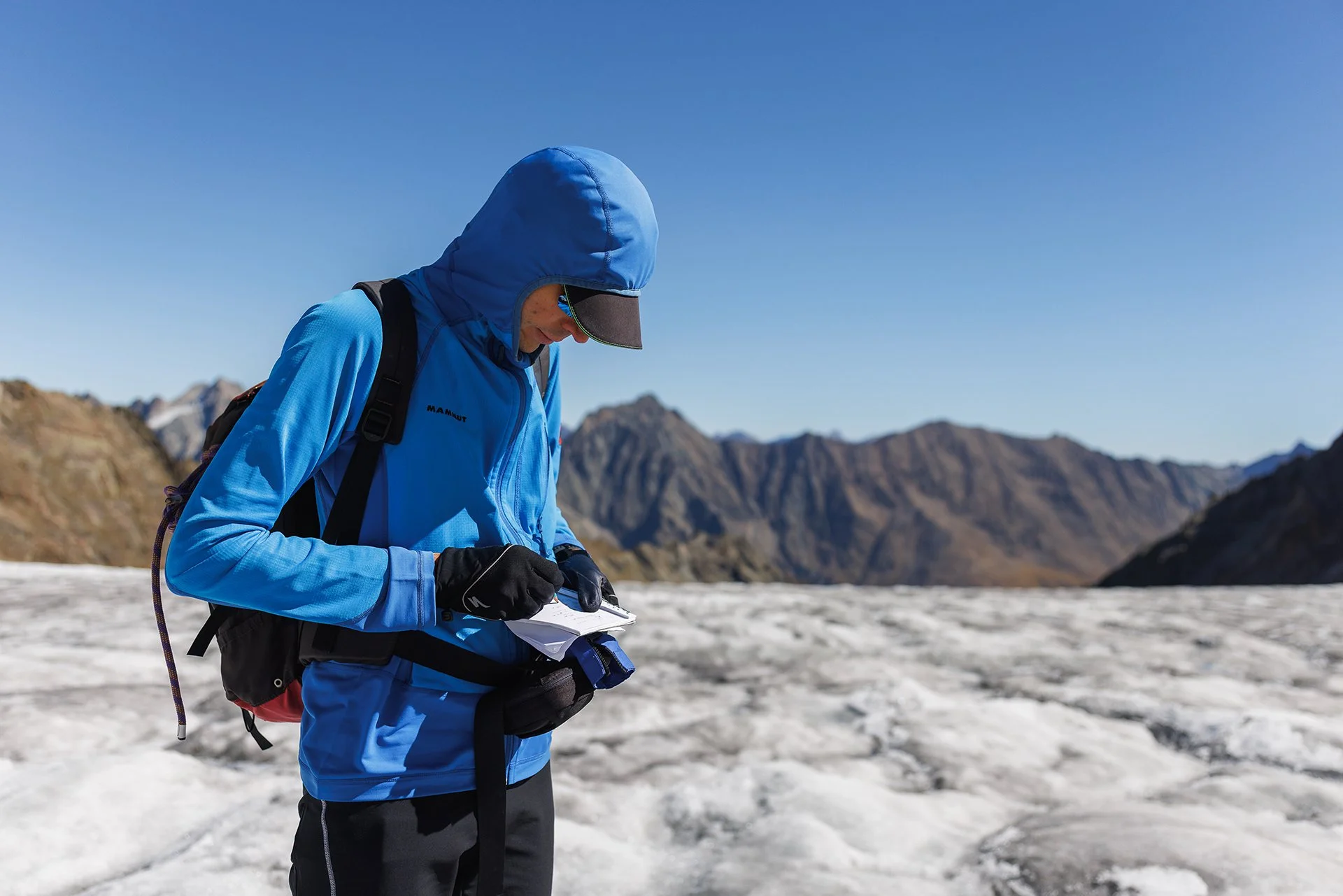
At the end of September, I accompanied Markus Strudl to the Seekarlesferner. Markus measures the glacier’s change in length there once a year on behalf of the Alpine Club. In addition, he has been voluntarily compiling an annual mass balance since 2013.
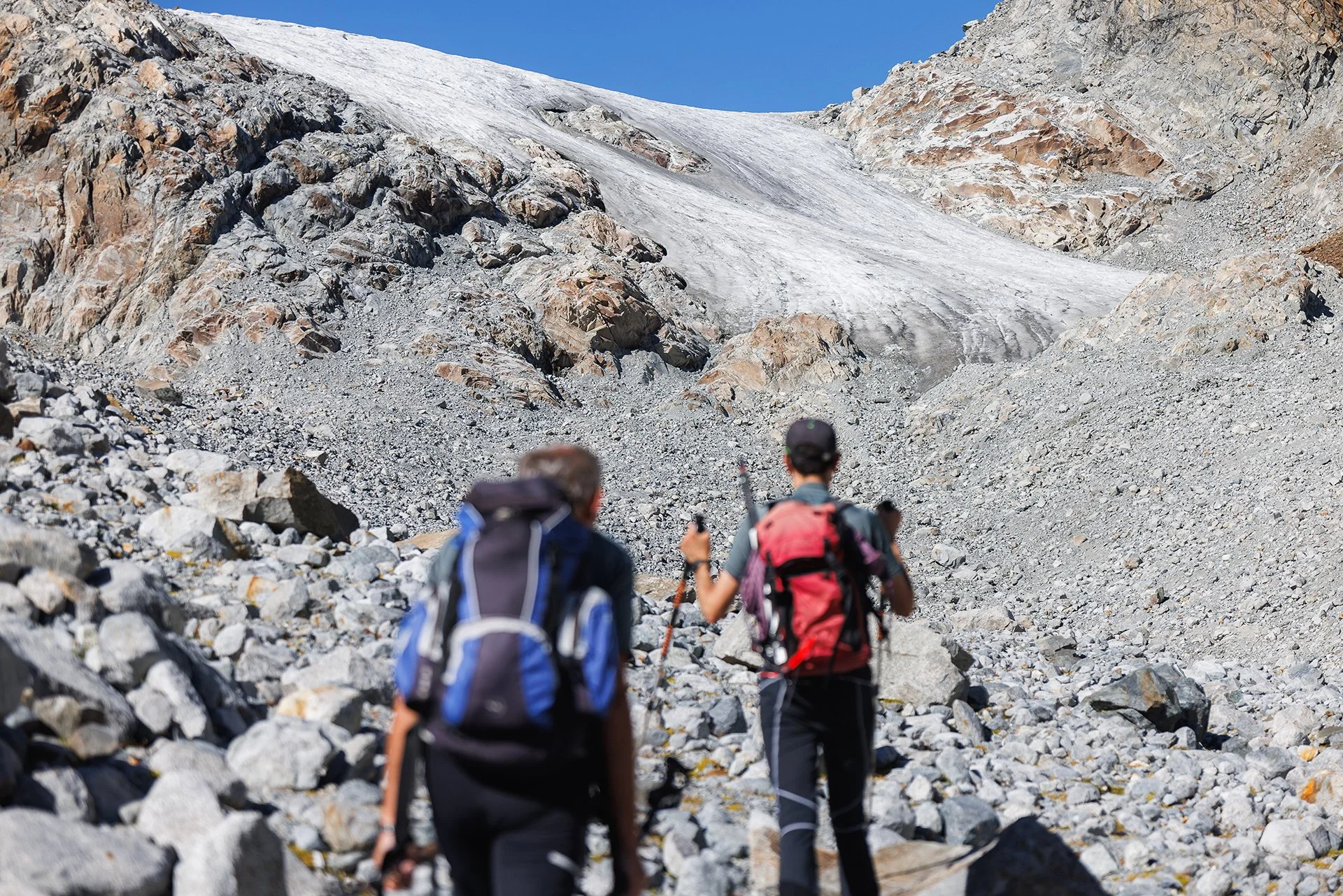
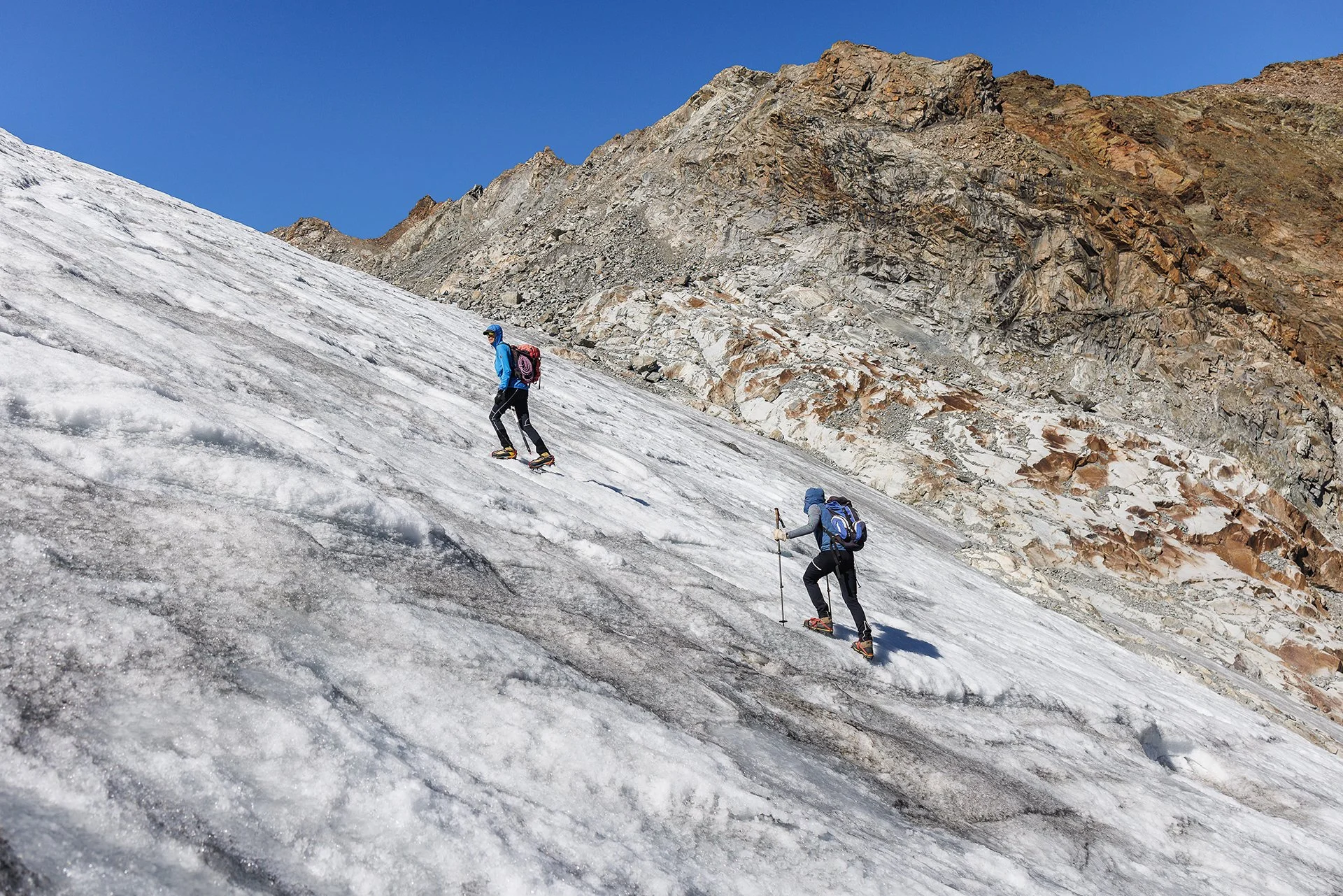
We met at the valley station of the Rifflseebahn just in time for the first gondola. Markus’s father was there to help with the measurements. After the gondola ride, we headed to the Rifflsee and from there set off on a steep, pathless ascent. The Seekarlesferner is tucked away in a high valley and is rarely visited.
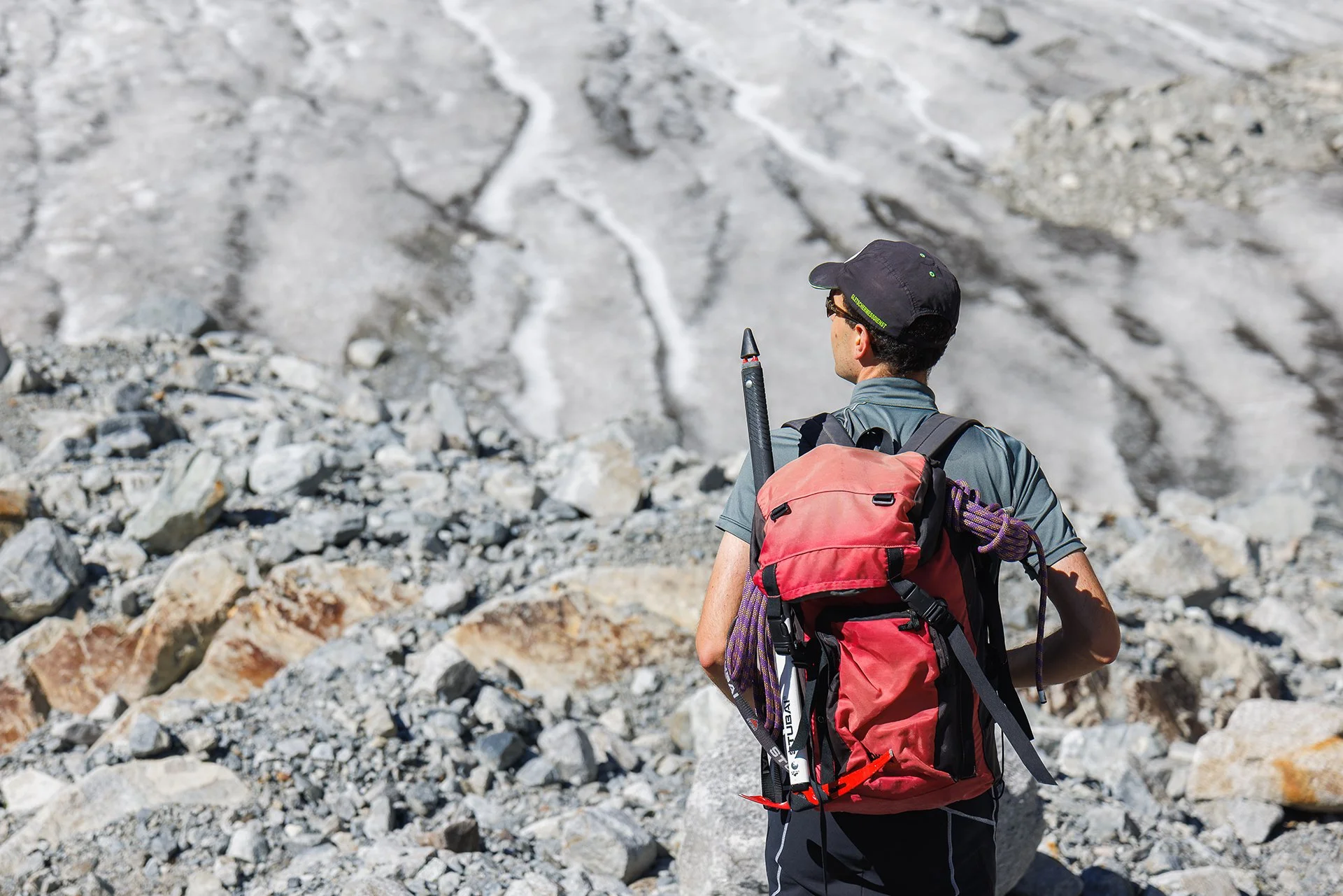
After about an hour and a half, we caught our first glimpse of the ice. We soon passed a large rock marked ‘A13’. Markus explained to me that this was his measurement point, dating from 2013. Back then, the ice had begun a few metres behind this rock. Today, 13 years later, the glacier can only be glimpsed in the distance.
Where it all startet in 2013: Measurement point ‘A13’.
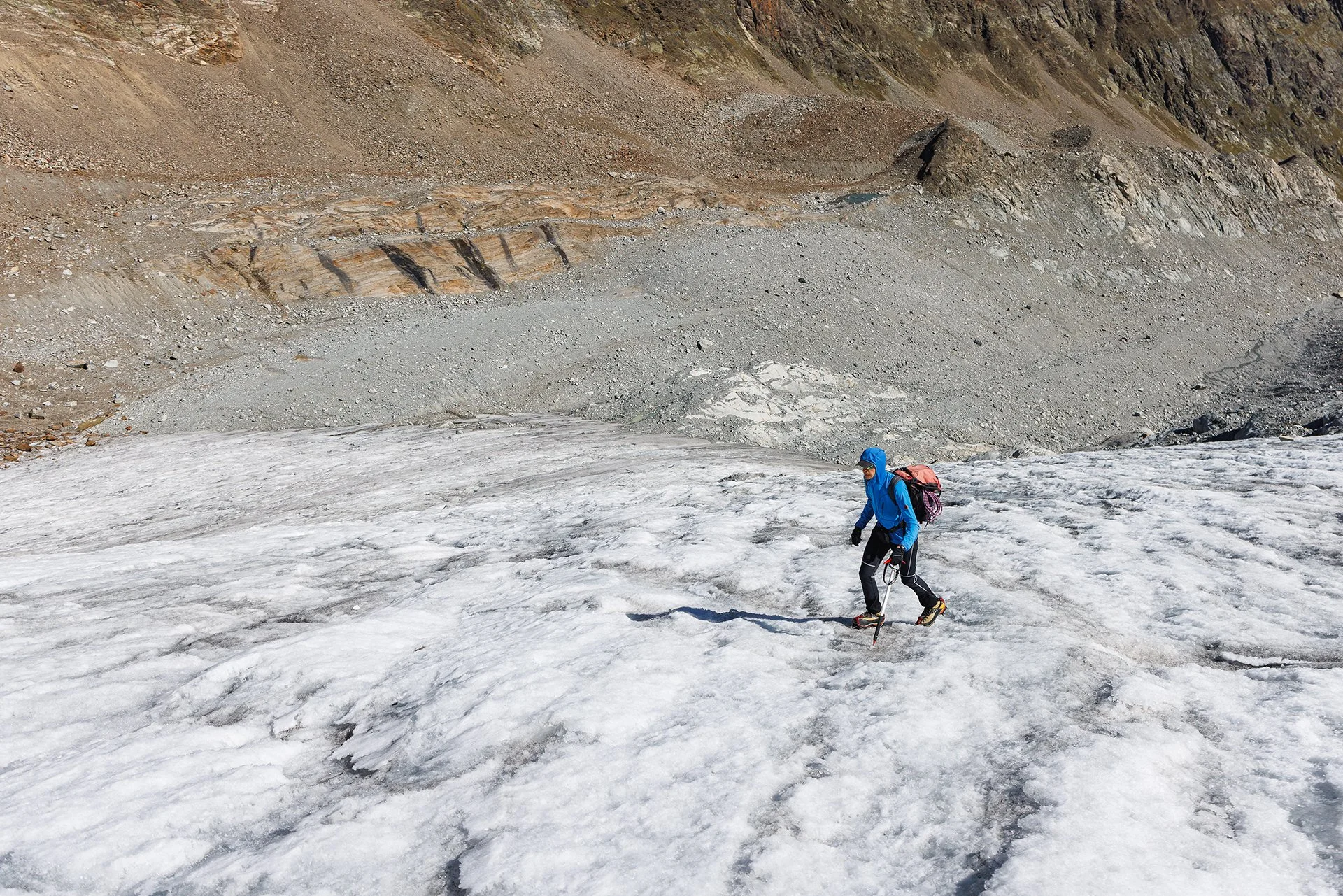
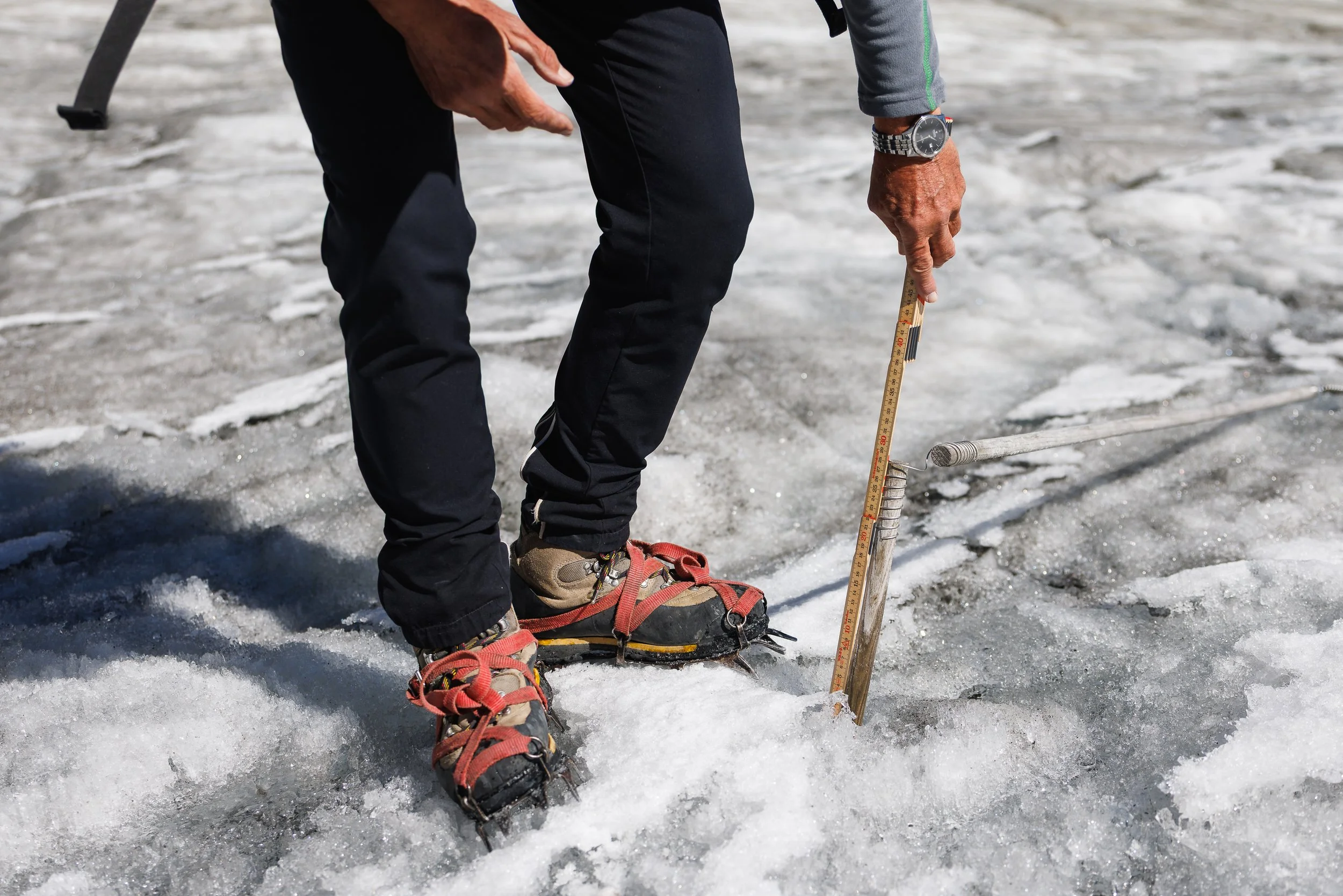
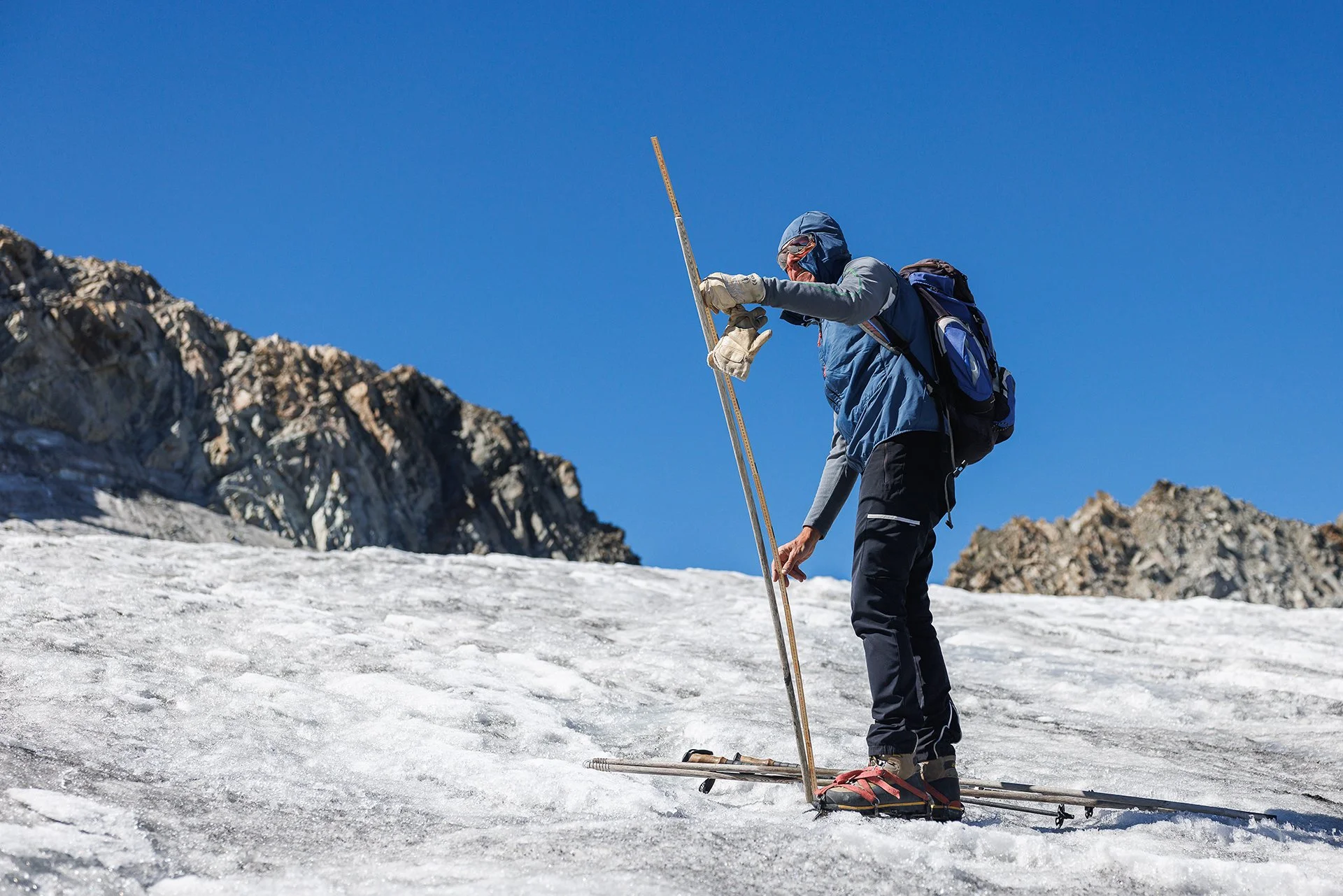
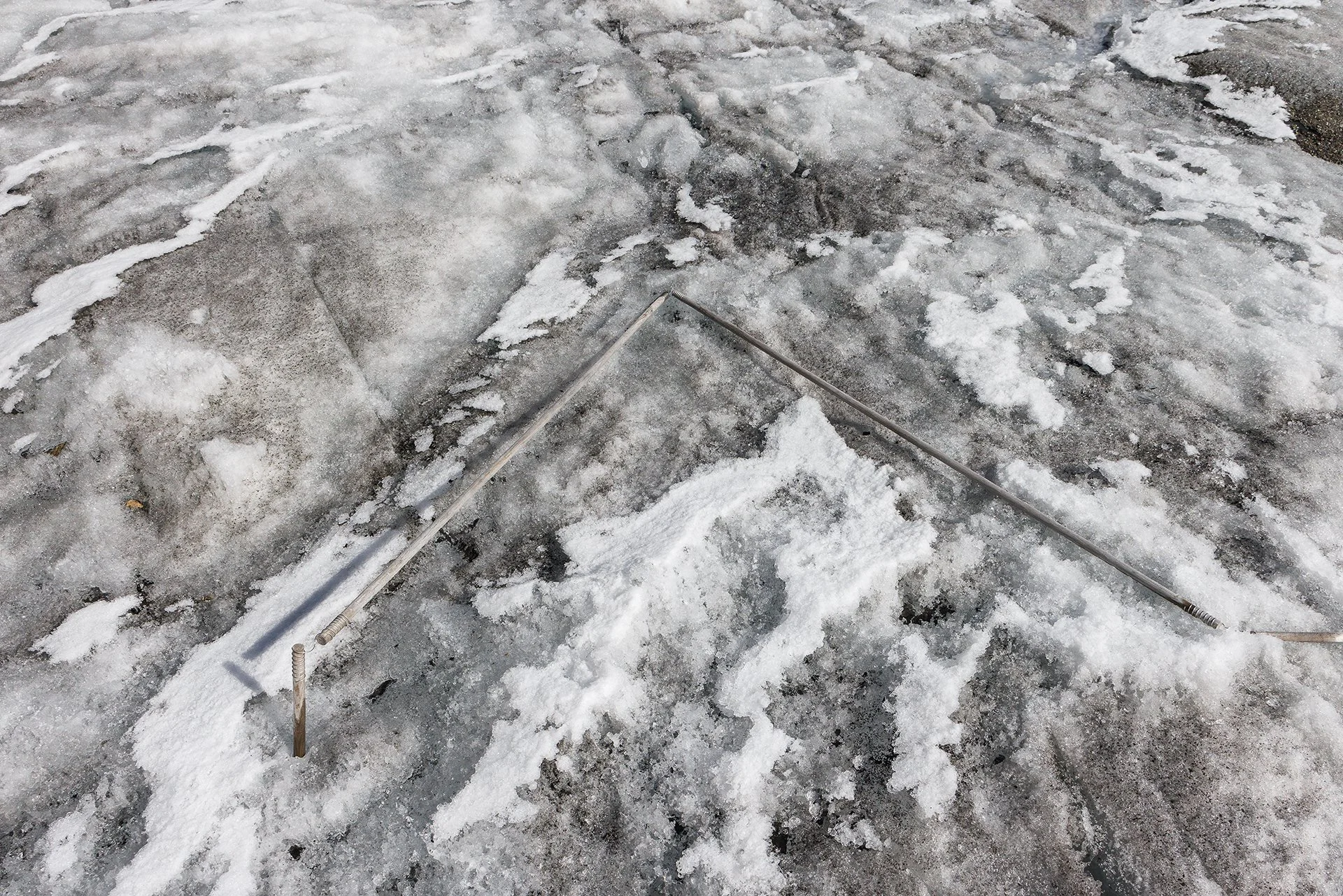
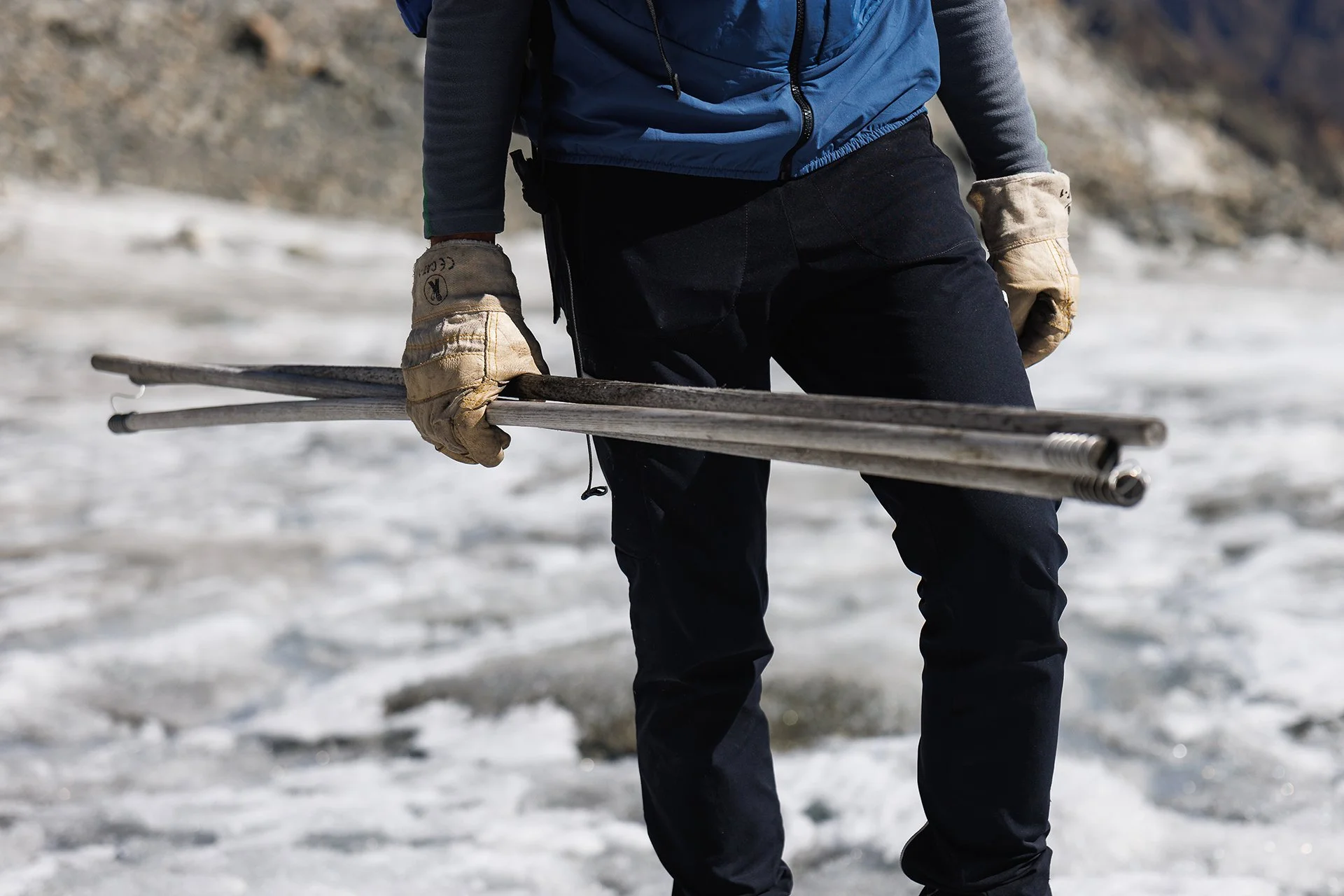
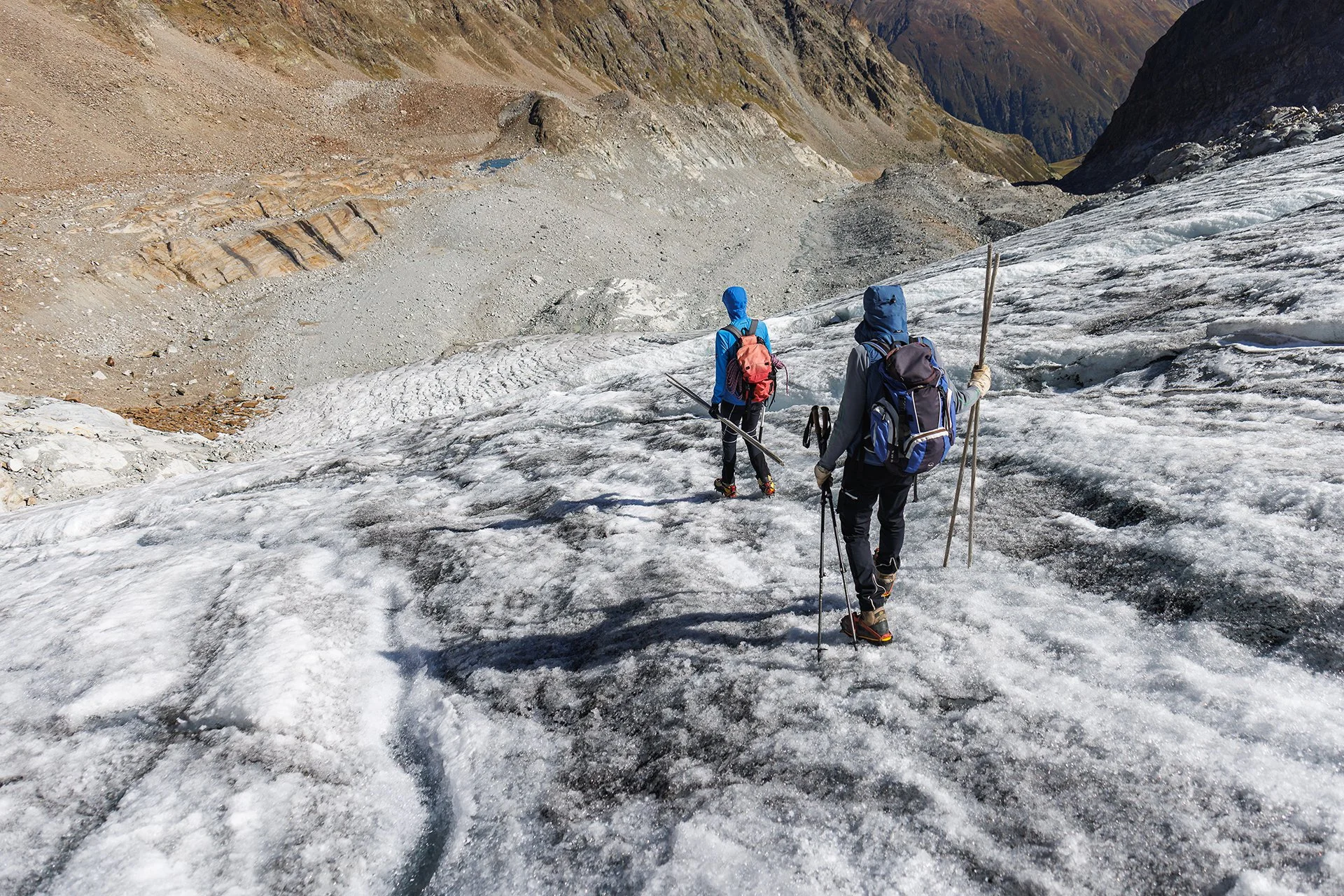
Once Markus had measured the change in length, it was time to put on our crampons and head out onto the glacier. There, Markus had set up several measuring points to record the loss of ice thickness. This is done using two-metre-long wooden poles, five of which are connected by wire. These are inserted into a ten-metre-deep borehole in the ice. Later, it is possible to see how far the poles have melted out of the ice.
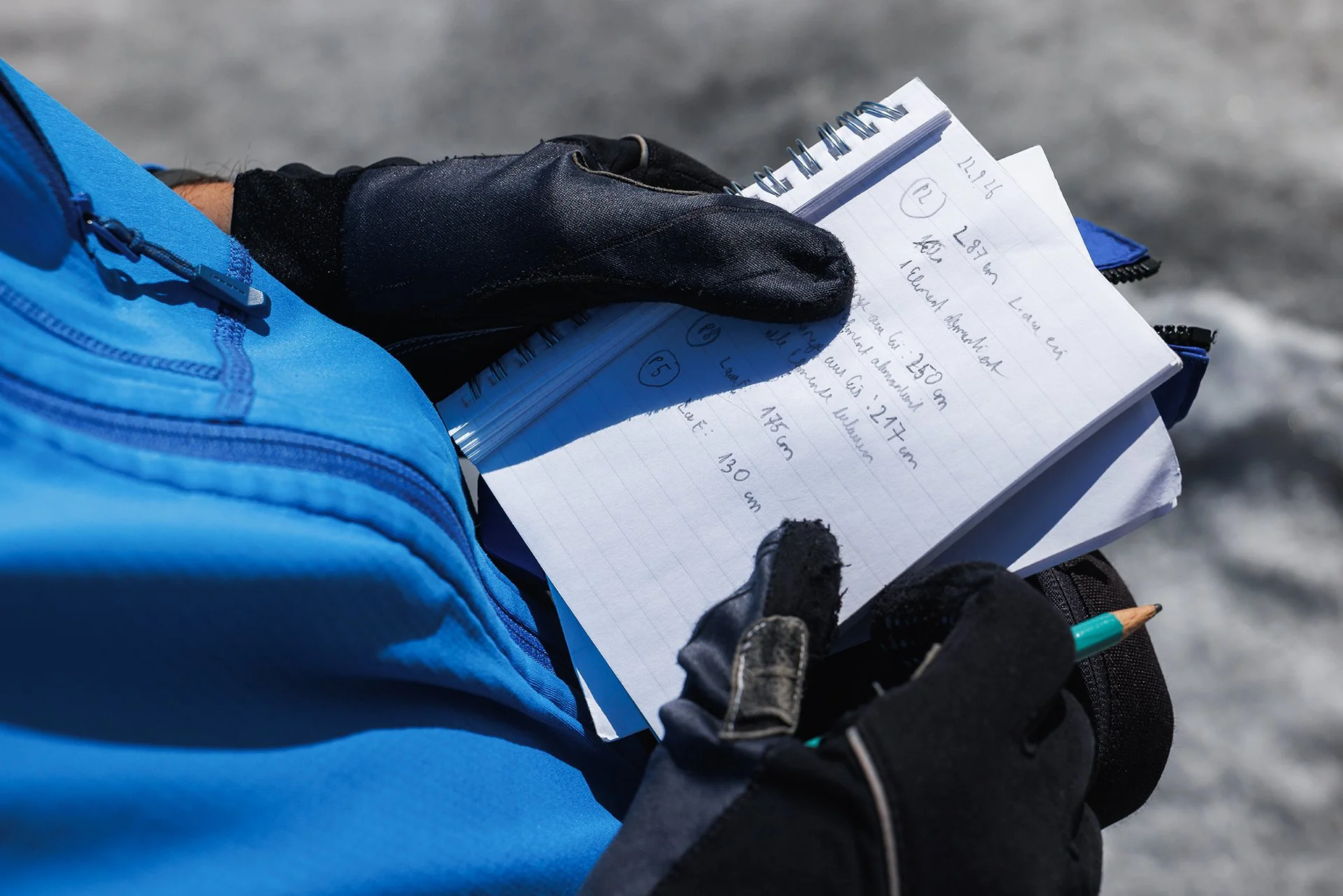
Markus uses this data to calculate the mass balance every year. Unfortunately, this year sets an inglorious record: the glacier has lost even more mass than in the previous record year, 2022.
Markus will draw up another mass balance for the Seekarlesferner next year as well. The question is how much longer he will be able to do so before the glacier has disappeared.